
Ed Ludd
There were still a few black cabs on London's streets, but those drivers who remained offered guided tours for tourists and spoke in mock Cockney accents...

This story was inspired by reading ‘Blood in the Machine’ by Brian Merchant, a history of the Luddite movement. The Luddites were skilled artisans who were displaced by machines that produced inferior goods more cheaply (sounds familiar?). The Luddites responded by smashing the machines and the movement attracted widespread public support, including the romantic poets Byron and Shelley. The government, however, was firmly on the side of the wealthy mill owners and responded with brutal military force and draconian legislation that made it a capital offence to smash the machines. Around forty Luddites were hanged and more were transported to penal colonies. The apocryphal figurehead of the Luddite movement was Ned Ludd or General Ludd, based on the legend of Ned Ludd, an apprentice who broke two stocking frames in a fit of rage.
Historically, the term Luddite has been used to describe someone who opposes technology, but this is a fundamental misunderstanding of the movement. The Luddites were not against technological progress per se. They were protesting the loss of jobs and the erosion of wages that led to widespread economic hardship and the decimation of their communities and way of life.
Parallels with the AI revolution are plain to see. Putting aside the risk of total annihilation, as things stand a few obscenely rich men seem destined to become even richer while millions of people lose their jobs or see their wages eroded. In the creative industries this process is already well underway. The question is what, if anything, we are going to do about it?
Fran x
2041
The idea came to Ed from a T-shirt.
Proud Luddite!
The T-shirt was pink, with gothic lettering, and Ed smiled at the girl wearing it. She didn’t return his smile. Not surprising, he was old enough to be her father. His own children were ten and fifteen. The ten-year-old was starting secondary school in September, and they would have to find money for a new uniform, not to mention school trips, software subscriptions, and all the other extras that fell to parents since privatisation.
Andy and Mick were at their usual table in the corner, and Ed told them about the T-shirt as he sat down. They’d been meeting at Jenny’s Caf three mornings a week since Ed finished ‘The Knowledge’ twenty years earlier.
‘What’s a Luddite?’
Mick dropped two sweeteners into his tea. Once they would have tucked into a full English, but their strained finances meant that was no longer an option. Since he sold his cab, Ed had taken to skipping breakfast, and lunch was a bag of crisps or, sometimes, a sandwich if he was home and could make it himself.
‘Isn’t that someone who hates progress?’ Andy said. ‘Someone who wants to live in the past?’
‘Sounds good to me,’ Mick said. ‘At least I’d still have a job.’
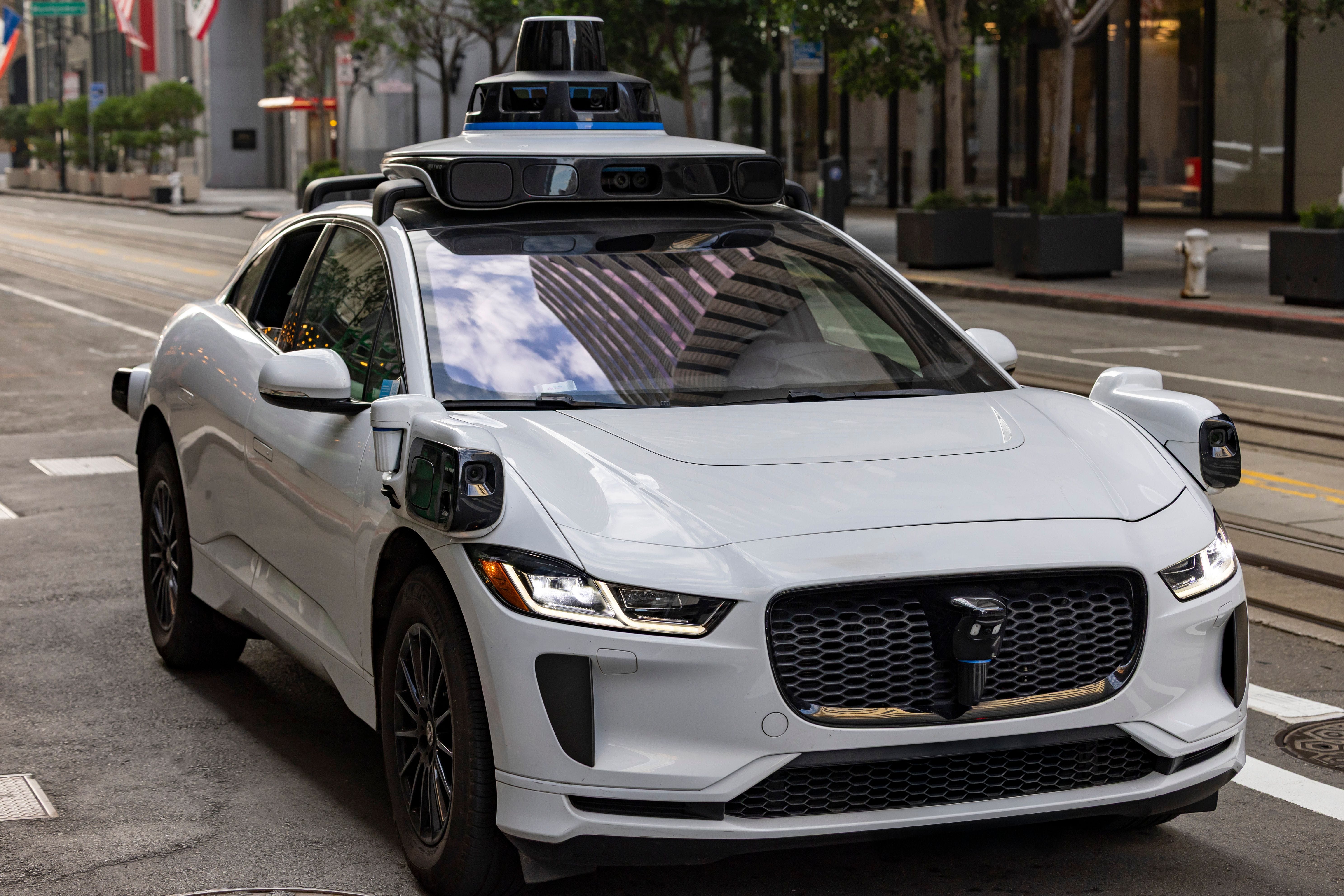
‘We all would.’ Ed was facing the window, and he watched as a driverless taxi slid neatly between two parked cars. There were still a few black cabs on London’s streets, but most had long ago given up trying to compete. Those drivers who remained offered guided tours for tourists and spoke in mock Cockney accents. One even dressed as a pearly king. It was humiliating, but Ed didn’t blame them; they also had families to support. ‘The Luddites weren’t against progress; they were against the rich bastards who were using technology to destroy working people’s livelihoods and make themselves even richer.’
‘So, what did they do then, these Luddites?’
A drip had formed on the tip of Mick’s nose, and he wiped it with a napkin. He was wearing the same jumper he’d worn last week and the week before, and Andy’s anorak had a tear in the sleeve. As the months rolled by, it was getting harder to keep up appearances.
‘They smashed the machines that replaced them.’
‘Did it work?’
‘Not really,’ Ed shook his head. ‘They hanged the ringleaders.’
‘Ouch,’ Andy raised his eyebrows. ‘Still, it’s a nice idea. I’d love to smash those bloody cars.’
It was a joke, except the more Ed thought about it, the more it wasn’t. The Luddites had attracted widespread public support, and the problem was far greater now. AI had wiped out jobs in almost every sector. His government-sponsored employment coach, an AI called Jobi, (unironically, the company was American), suggested retraining as a plumber or a bricklayer. When Ed pointed out that there wasn’t enough work for the existing glut of plumbers and bricklayers, Jobi suggested investing in cryptocurrency. If it hadn’t been for the camera monitoring their interaction, Ed would have told Jobi to stuff his cryptocurrency where the sun didn’t shine.
Two days later, when the three of them met again, Ed broached the idea he’d been fermenting.
‘What if we all ordered a self-driving car at the same time?’
‘The three of us?’ Andy didn’t look up from the menu, which he was scrutinising with the intensity of a man faced with an impossible choice. ‘I don’t think that’s going to scare them, mate.’
‘No, I mean all of us. All the unemployed cab drivers.’
‘Including Uber?’ Mick asked doubtfully.
Until autonomous cars came along, Uber drivers were the enemy, undercutting prices and giving the industry a bad name with their tacky air fresheners and dubious music choices. Ed nodded.
‘And delivery drivers. For the plan to work, we need a network across the country.’
Andy put the menu down. Ed knew he would have an Americano. He always did.
‘Okay, hundreds of us order self-driving taxis, and then what?’
‘Then we spray-paint their cameras so they can’t go anywhere. If we choose the locations carefully, we can create chaos, not to mention losing the companies that operate them a tonne of money.’
‘We’ll get arrested for damaging property.’
‘Probably,’ Ed conceded, but there are tens of thousands of out of work drivers up and down the country with nothing to lose, and we don’t need to limit the campaign to drivers. What about the millions of office workers and warehouse pickers who’ve lost their jobs to AI? It could become a global movement. We start with self-driving cars and progress to delivery drones, data farms, and chatbots.
Jenny, the café’s owner, placed a mug of tea in front of Ed. Although the café was always full of unemployed men, her business was suffering because no one had any money. A tent card in the centre of the table reminded customers to buy a minimum of one hot or cold drink every hour to secure their seat.
Mick was stroking his beard. ‘So how would we find all these people?’
‘Easy,’ Andy said, ‘Facebook. There are loads of groups where unemployed drivers congregate to grumble and lick their wounds.’
Ed, who had hitherto avoided social media, created a profile on Facebook and joined as many groups as he could find. Slowly but surely, the movement built. Like the Luddites of old, they met in person in each other’s homes. Online discussion was forbidden, and they screened every new member carefully. On March 11th, two hundred and thirty years after the original Luddites smashed the first knitting frame, Ed ordered a self-driving taxi to the street where Google was headquartered. Soon towns and cities across the UK were paralysed as hundreds of similar taxis came to a standstill in busy thoroughfares.
In the first week of action, the security services arrested more than a hundred drivers including Ed, Mick and Andy, but as Ed predicted, their protest caught the imagination of a population worn down by job losses and the hollowing out of public services.
Designers rendered obsolete by AI hand-printed posters decrying the misery wrought by the billionaire tech barons and corrupt politicians who enabled them. Jobless accountants and solicitors ordered autonomous taxis only to disable them, and hackers targeted delivery drones and automated warehouses. Bills and taxes went unpaid as customers closed their cryptocurrency accounts, and artisans creating human-authored books and works of art saw their sales surge.
As the movement grew, the stock-market plummeted, and the tech barons demanded tough action from the politicians whose campaigns they had funded so generously.
Ed was in hiding when they came for him. After weeks of sleep deprivation in a windowless cell, a member of the group cracked and revealed that Ed was living in the attic of a sympathetic poet. Ed was the last of the Three Luds, as they were known, to be arrested. Mick and Andy had already been convicted under the terrorism-act and thousands of the movement’s supporters were being held in the primitive camps that had previously housed immigrants. Like the immigrants, many were facing deportation. Specifically, to a re-education facility in Siberia that was part of the government’s co-operation agreement with the Russian Federation.
A drone hovered above Ed’s head as four masked police officers in bullet-proof vests hustled him out of the house. The poet was already in the van with his hands cuffed behind his back. He gave Ed a wry smile.
‘We never learn, do we?’
‘We started too late, but at least we tried. That counts for something.’
The officer gripping Ed’s arm shoved him so hard, he nearly fell as he climbed the steps into the van. The doors slammed behind him, and through the tiny, barred window that separated the prisoners from the cab, Ed watched sadly as the steering wheel turned unaided and the van began to move.
Thank you for reading. If you enjoyed this story, a like or a share would be much appreciated, and subscribe to receive more twisty tales directly to your inbox.
Brilliant F. Eye opening and sad at the same time as it more than likely will come to this. We don't need driverless cars etc do we? It's just for the greed of the AI companies. People must come first x
A scary tale. Let's hope it doesn't come to this...